The loud humming of the airplane’s engine made my ears ring as I stared out the window, watching the shoreline drift beneath the clouds. Cape Cod had been a week of salty ocean air, uncontrollable gusts of wind, seagulls screaming overhead, and sand between our toes. I remembered the early dawns when a cup of coffee with family was all I needed. Or when our laughter was louder than the crashing of the waves against the shore. The smell of fresh oysters and crinkle-cut fries at the pier, small towns lined with picturesque cottages, and neighbors who always greeted each other with the brightest of smiles. It seemed as though the world had paused for us there. Everything had felt perfect, almost too perfect.
One late afternoon, while walking through one of those quiet towns, I came across a tiny bookstore. I had wandered up and down through the narrow aisles, my fingers brushing the spines, desperate to find my next read. Then I saw it: a bright red cover with bold white letters. The Handmaid’s Tale, the title read. Now on the plane ride back home, the book felt fragile in my hands, small; its cover smooth, inviting. As I opened the cover and read the first few pages, the world of Gilead rose up around me. The ringing in my ears disappeared, as well as the loud humming of the engine; I was no longer on a plane. I was in Atwood’s world. The life of Offred, the protagonist, unfolded in a careful, precise rhythm. Each day was a series of small rules and tiny prohibitions, a cage built out of restrictions and words rather than walls. Simply walking, speaking, or even looking another in the eye promised danger. The horror in this book wasn’t loud or violent, it was ordinary; my everyday. The actions I took without thought were the very ones Offred had to avoid and fear, and it terrified me.
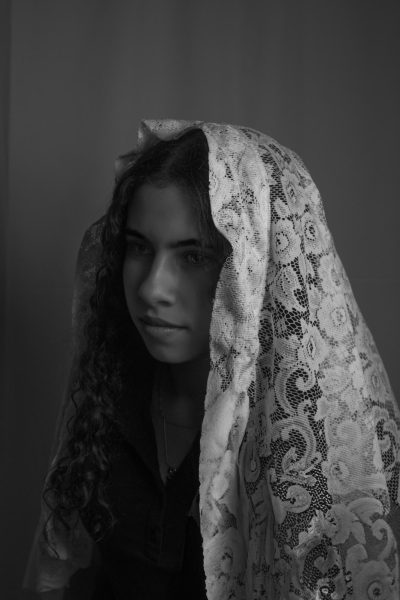
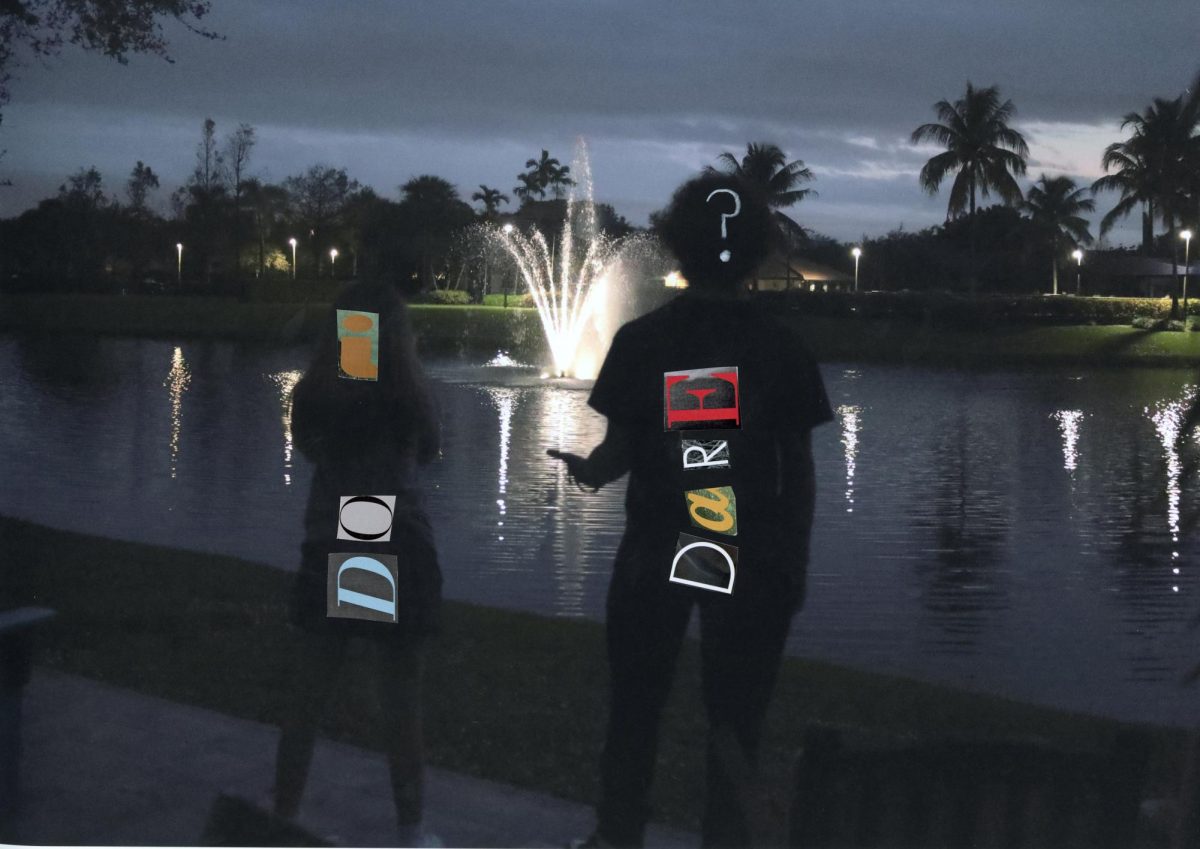
DSLR Basics by Milan Rouhani
I started seeing the handmaids moving throughout Gilead. Their eyes were always downcast, faces pale, and their bodies vessels for someone else’s ambition. Throughout the story, their freedom had been stolen piece by piece, beginning with small, trivial things I barely noticed they were gone. The handmaids were endlessly reminded that they were nothing but fertility, that their own voices did not matter. I began to feel their fear rise in my own chest. Suddenly, what I was reading didn’t seem all that fictional anymore. If anything, it felt like I was looking into a mirror, showing the quiet ways society can claim control over a woman’s life. Sometimes it wasn’t always through force. Sometimes it’s through expectations so familiar that we stop questioning them, such as how we dress, how loudly we speak, whether we seem polite, put together, respectful, desirable. It’s in the way girls learn to shrink themselves without being asked. How we are taught to apologize before we even comprehend what for. Gilead was terrifying not because it was impossible, but because it was familiar.
I could see its similarities in today’s world. Rules that define women, the casual disregard for our choices, the constant measurement of our worth through what we give rather than who we are. Throughout history it has been shown how women have struggled, and yet oppression resurfaces, silent, unrelenting, patient. For centuries, women have been told constantly what their bodies are for, what their roles should be, and what behavior is acceptable.
We have been denied education, property, our own money, medical autonomy, safety, and the right to vote. In Gilead, the handmaids were reduced to their bodies, their names stripped away, their humanity was rationed like bread in a famine. Watching Offred slowly lose herself—up to the point where she questioned if resistance was possible—made it hard to stop reading.
The more I read, the more The Handmaid’s Tale left me trembling. I was afraid that I might grow up in a world that quietly teaches silence. I was afraid of bringing life into a world that might demand it in exchange for humanity. This book forced me to confront the traits I was unaware I had inherited, the ones that told me it’s better off to be quiet, to smile at moments when it felt right, to be good, to be grateful even at moments when it felt wrong. Atwood forced me to question, to imagine, to feel the danger of a society that punishes curiosity, that punishes thought itself. Even now, I feel that weight pressing against me, and I know the story is a warning. We cannot take freedom for granted, not even for a moment.
So as the plane continued, its steady hum and Cape Cod slowly disappeared beneath the clouds, I thought about the mornings on the beach, the smell of freshly brewed coffee, and the sound of laughter mingling with the waves. Those moments still lingered within my mind, but their softness felt strange after reading The Handmaid’s Tale. The book had shifted something inside of me. The world I had perceived with warmth and weightless memories suddenly felt colder and more confined. The happiness I had once felt so easily now seemed silly, fragile, almost breakable. Even the small, perfect moments of my life in Cape Cod felt different. Maybe I had been too young, or too willing to ignore it, but I realized the world wasn’t as gentle as I wanted to believe. Those memories of sand between my toes and the warmth of the sun didn’t feel precious, they felt temporary. I learned that freedom, the simple everyday kind, was something I should never take for granted. And just like that, the coastline below me served as a reminder. That every moment of joy, every unspoken choice, every bit of laughter louder than the waves is a kind of resistance.
Biography
My name is Amelia Corbo, and I am currently in the 11th grade. In my free time I enjoy playing video games, reading, and watching shows/movies. I also love to hang out with my friends, and spending time with my cat.
What is your main source of inspiration?
My main source of inspiration is usually books, art I come across, and shows or movies. I’m also inspired by stories people share with me, since they often give me new perspectives and ideas.
What motivated you to write this piece, and what is its message?
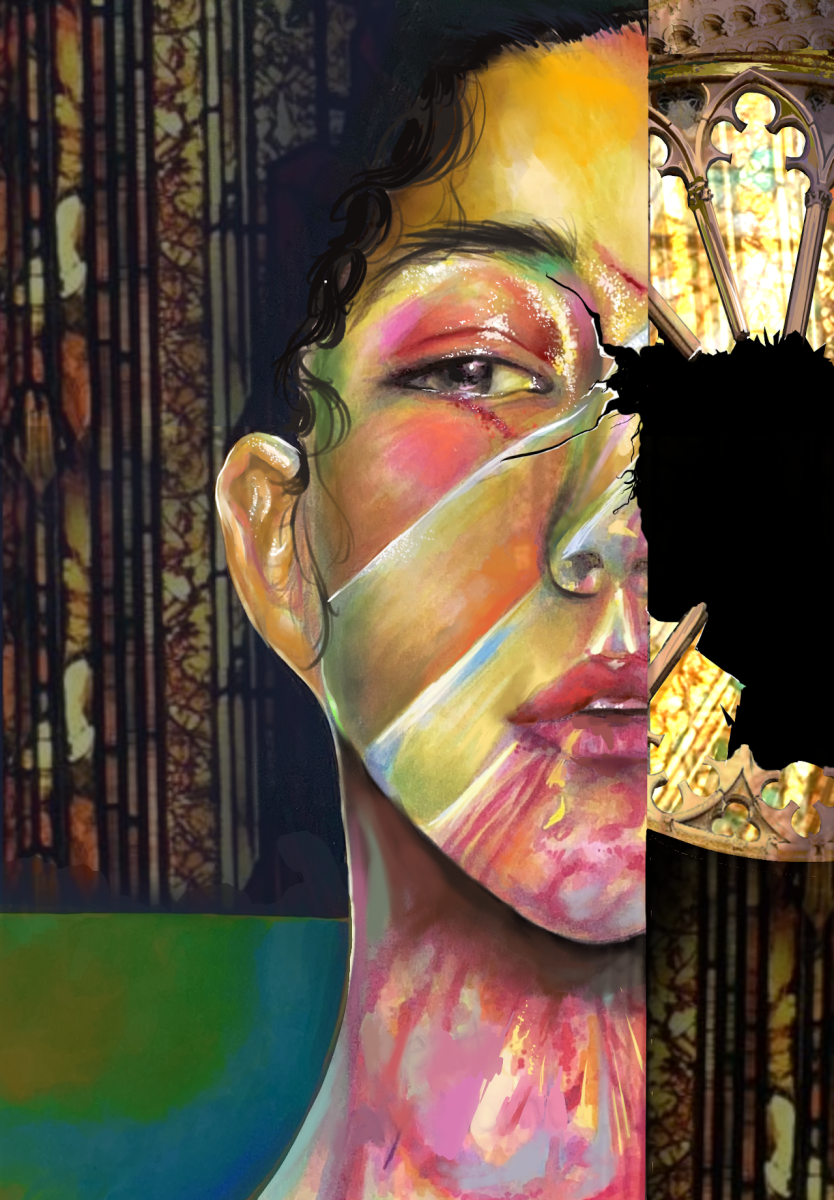
I was motivated to write this piece after seeing a piece of art that really stuck with me. Although I found it on TikTok and can’t credit the artist, it left a strong impression and sparked the idea for my fable. I was also inspired by the saying “a sheep in wolf’s clothing” or vise versa.