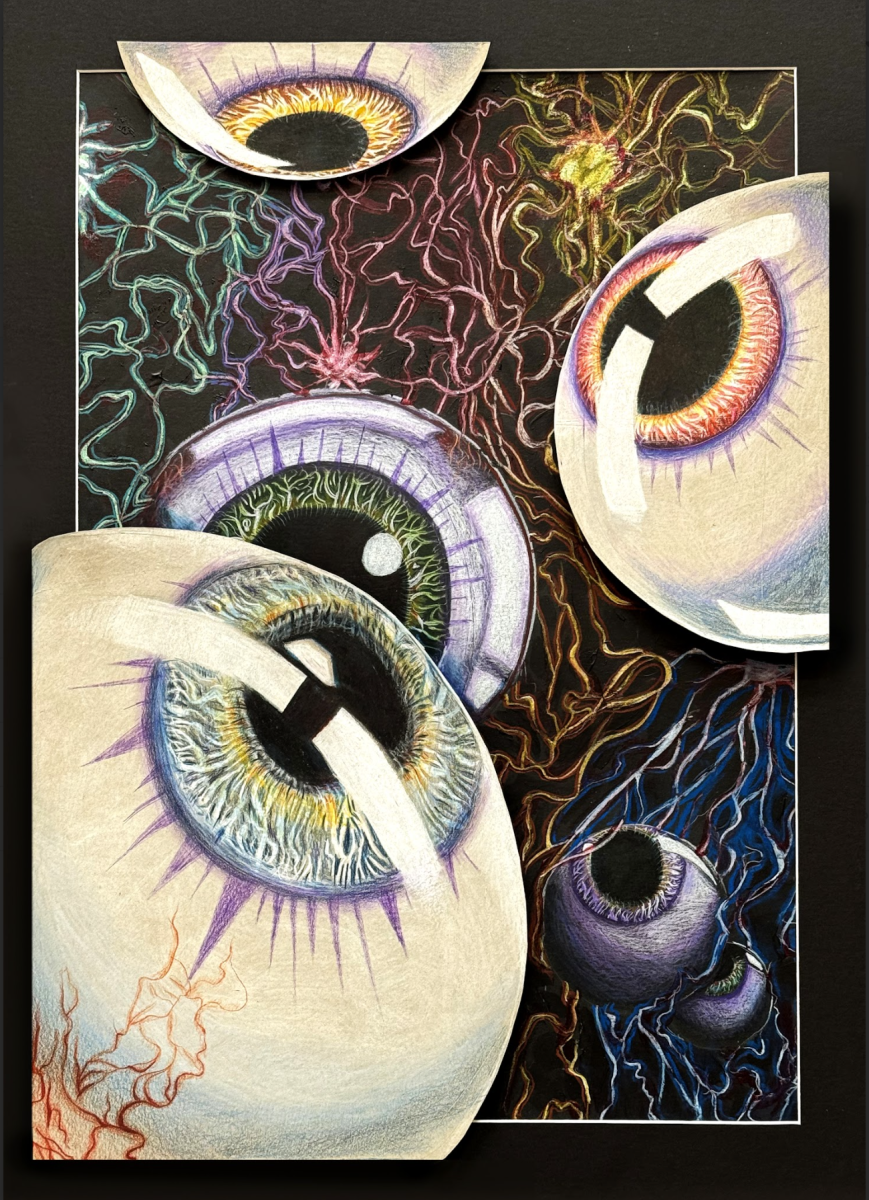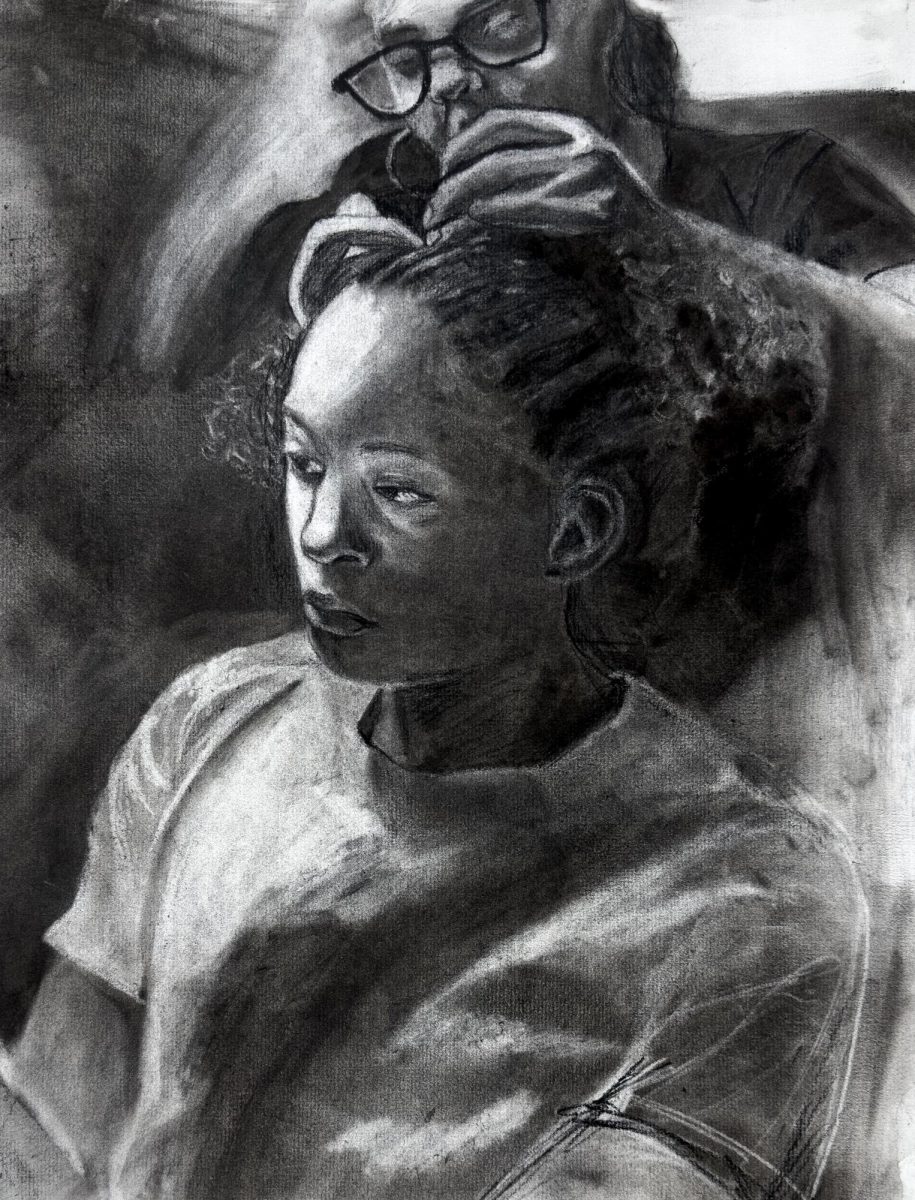


Color Pencil by Camila Galindo Reyes
It is within human nature to question and resist authority, for not all authority lies in tandem with morality. That is to say, authority need not act within a moral framework to impose its own jurisdiction. As a collective, humankind resists authority when they find it to be tyrannical and contrary to the will of the people. This very resistance serves as the benchmark for progress, uprooting authority in favor of justice. Indeed, disobedience serves as the hallmark of social progress as it creates social revolutions and inspires future generations to fix unjust Institutions.
In 1776, the United States formally declared their sovereignty from a colonialist global empire. In doing so, all members of the Second Continental Congress recognized they were committing an act of rebellion against the King. To that end, if their fight for independence was unsuccessful, all members of the Second Continental Congress would be sentenced to death. Despite the substantial risk in defying authority, these delegates chose to fight for their values. As the story goes, the 13 colonies eventually won the Revolutionary War, creating a staple of democracy and the first example of republicanism within the New World. If the Continental Congress chose to submit to the Crown and submit to authority, it is unlikely that the United States would be the same beacon of freedom that it is today. It is only through disobedience that the Continental Congress was able to lay the foundations for a new, successful democracy. It was only through disobedience that James Maddison was able to create the first Republican government system in the entire world. It was only through disobedience that our founding fathers were able to create a lasting social revolution. However, America’s history of social revolutions did not end during the Second Continental Congress in 1776 or the Constitutional Convention in 1787. Nearly two centuries later, Americans joined arm-in-arm to fight for Civil Rights for all people within America. That is to say, all Americans deserved the same liberties and freedoms. Americans attended sit-in protests to demonstrate their belief in equality. Dr. Martin Luther King organized rallies, marches, and protests to stand for equality. Americans believed in equality for all. And over time, the United States Government began to act. The Supreme Court of the United States (SCOTUS) overturned Plessy v. Ferguson in Brown vs. Board of Education, maintaining that the separate but equal doctrine violated the equal protection clause. In the 1960s, the Civil Rights Act was signed into law, finally securing equality in America. It was through the very same disobedience demonstrated by the founding fathers that Americans were able to secure civil rights for all. If Americans were unwilling to resist the oppressive, racist authority previously subjected upon them, minorities in America may not be free. Americans demonstrated their passion for equality through their rejection of a tyrannical force, highlighting disobedience’s role in creating social progress within societies.
Furthermore, disobedience emboldens future generations to act against institutions they view as unjust. In A Room of One’s Own by British author Virginia Woolf, Woolf desires to convince females to work within traditional male-dominated spaces. Despite patriarchal structures seemingly bringing down female voices, Woolf encourages women to persevere. Woolf encourages women to insert themselves into these spaces, inspiring future generations of women to create their own literature and develop their intellectualism. Indeed, Woolf’s disobedience serves as an inspiration for future generations of women. Many female authors credit Woolf’s ideas as the basis for their success in the modern era. Without Woolf’s disobedience against patriarchal structures, many feminist authors may not have created the valuable works that they contributed to society. In addition, this trend of disobedience inspiring others is clearly demonstrated within the recent election cycle. In 2024, President Donald Trump was elected with a staggering 312 electoral votes. However, over the last year, many have felt as if his policies violated the Republican ideals brought forth by James Maddison. As a result, many “No Kings” protests have erupted over the entirety of the United States, drawing millions of individuals against the President’s policies. During the 2025 election cycle, Trump’s Republican Party suffered a resounding defeat, losing comfortably in the Virginia and New Jersey Governor elections. In fact, these elections received record turnout for an off-year election cycle. Thanks to the disobedience demonstrated by the “No Kings” protestors, Americans were emboldened to take to the polls against the Republican Party. Without the disobedience of millions of Americans in these protests, the 2025 election results could have differed drastically. However, the disobedience of these protestors inspired the American people as a whole to have their voices heard, clearly demonstrating how disobedience develops social progress.
Critics may argue that disobedience serves as a hindrance to a lawful, productive society. However, George Orwell’s 1984 renders this point moot. In 1984, Orwell identified how conformity without critical thinking is detrimental to society. In this book, Big Brother served as the dominating figure within their world. Without any sense of disobedience, Big Brother was able to secure more and more power. Therefore, 1984 demonstrates how civil disobedience is the only way to actually create a lawful, productive society through rejecting a tyrannical institution.
Critically, disobedience’s ability to create social progress is demonstrated through its unique role in establishing social revolutions and inspiring future leaders to take a stand against injustice. In fact, civil disobedience has become part of an ongoing conversation about how to successfully balance listening to authority with rejecting injustice. Disobedience is a virtue implicit within human nature. It is with this virtue in mind that we understand how disobedience allows society to progress as a whole.

Watercolor by Meng Lin
-
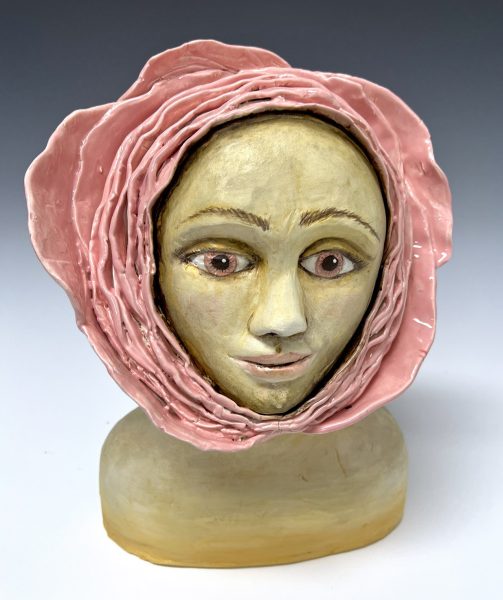
“Peony”
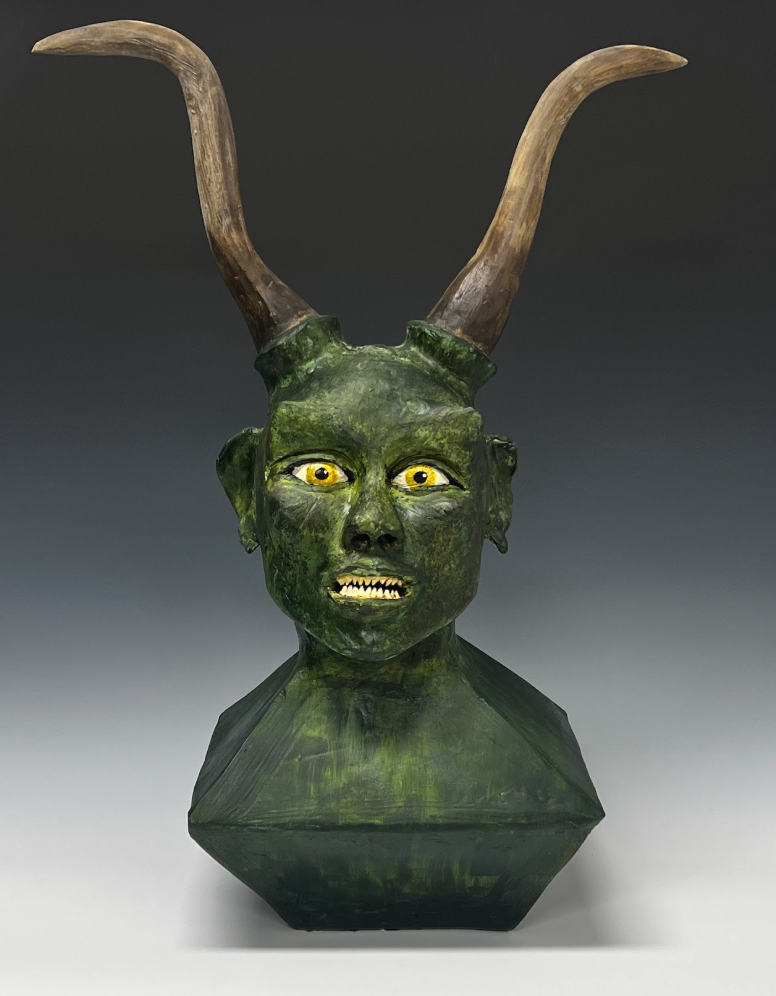
Ceramics by Layla Manning-Floyd
Biography
My name is Jonathan Schwartz and I am a junior at American Heritage Broward. I am the Founder and President of Civic Conscience, a nonprofit dedicated to teaching middle-school students about ethical-decision making practices. I am also heavily involved in Model UN, Moot Court, & Mock Trial. Outside of school, I love playing poker and pickleball, watching sports (Tottenham & Montreal Canadiens), playing Football Manager, rating movies on Letterbox, and talking about everything elections related.
What is your main source of inspiration?
In terms of writing, my Moot Court coach, Mrs. Burkhalter, has been instrumental towards my development. Throughout my years in high school, Mrs. Burkhalter has worked with me tirelessly to help improve my writing and argumentation skills. Thanks to her hard work and belief in me, my writing style has become much more precise and digestible.
What motivated you to write this piece, and what is its message?
Funnily enough, my essay was written in response to an AP Lang FRQ prompt. My AP Lang teacher, Mrs. Cedeño, advised me to submit this essay to the literary fair. While incidental in nature, my writing validates an extremely important principle: civil disobedience. I examined historical & modern trends, ultimately determining that civil disobedience is inherently necessary towards the progress of civilization.